—του Anton Kusters | Απόδοση για το dim/art: Γιώργος Θεοχάρης—
Το Yakuza είναι μια συλλογή φωτογραφιών που καταγράφουν τη ζωή στους κόλπους μιας κλειστής υποκουλτούρας: μιας παραδοσιακής ιαπωνικής εγκληματικής οργάνωσης η οποία ελέγχει τους δρόμους του Καμπουκίτσο (σημ.: συνοικία με έντονη νυχτερινή ζωή, γνωστή και ως «η πόλη που ποτέ δεν κοιμάται»), στην καρδιά του Τόκιο, στην Ιαπωνία.
Μετά από δεκάμηνες διαπραγματεύσεις με τους Σινσέκι, ο αδερφός μου Malik κι εγώ γίναμε οι μόνοι δυτικοί στους οποίους δόθηκε ποτέ πρόσβαση στον περίκλειστο κόσμο του οργανωμένου εγκλήματος στην Ιαπωνία.
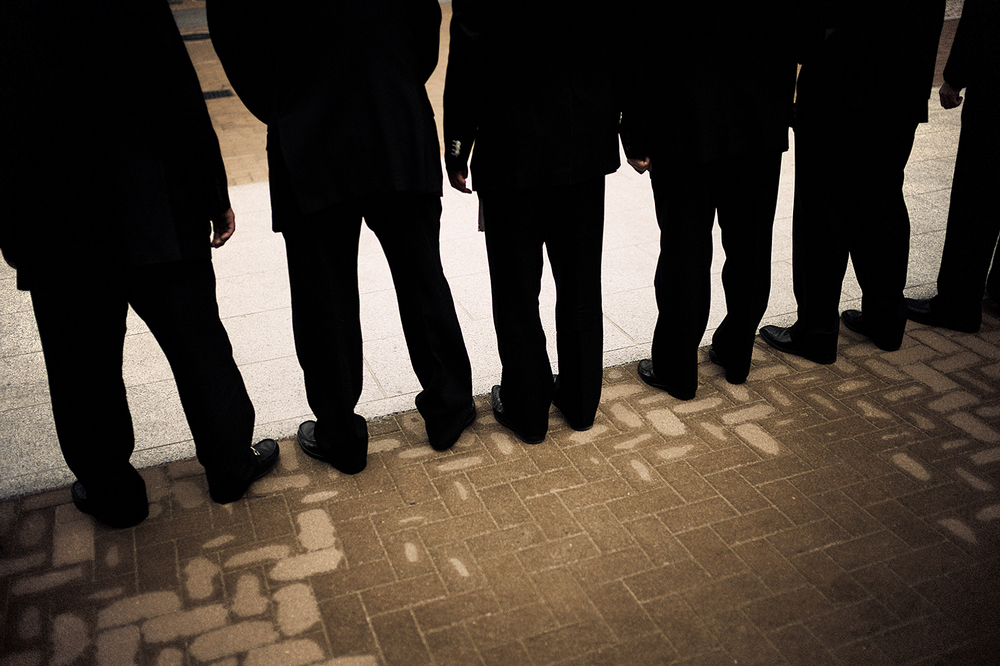
Μέλη της Γιακούζα στέκουν σε παράταξη για να υποδεχθούν τους προσερχόμενους στην κηδεία του Αφεντικού Μιγιαμότο-σαν (Τόκιο, Φεβρουάριος 2011)
Στο βιβλίο, περιγράφω την περίπλοκη σχέση των μελών της οργάνωσης με την ιαπωνική κοινωνία και δείχνω τον προσωπικό τους αγώνα να ζουν ταυτόχρονα σε δύο διαφορετικούς κόσμους· κόσμους που συχνά έχουν αντικρουόμενες ηθικές αξίες.
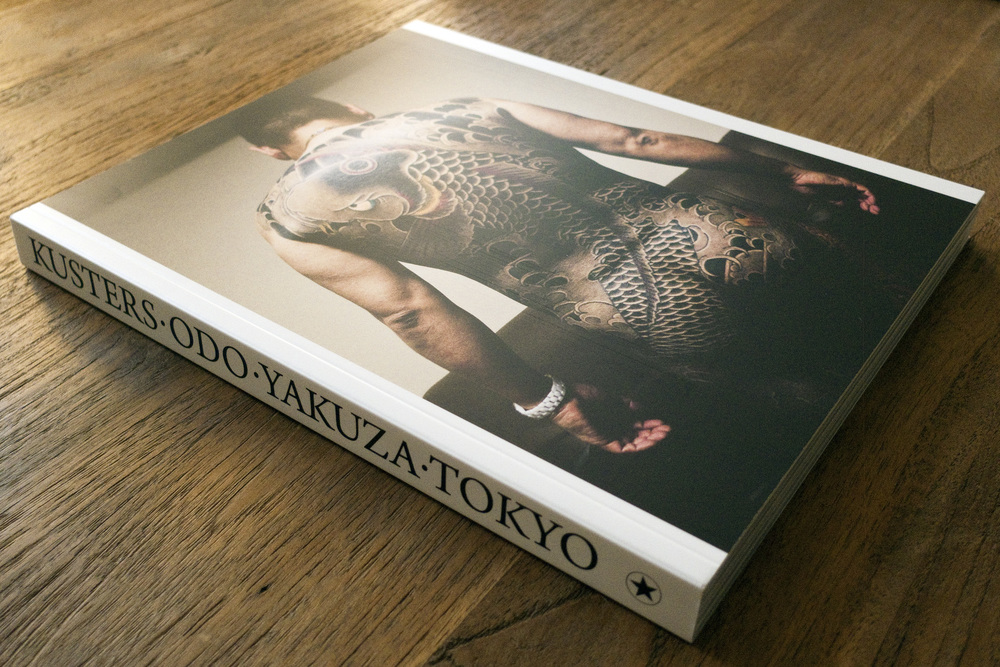
Anton Kusters, Odo Yakuza Tokyo (δεύτερη έκδοση, Σεπτέμβριος 2011)
Αποδεικνύεται ότι δεν πρόκειται για μία σχέση «άσπρο-μαύρο»· αντιθέτως, οι γκρίζοι τόνοι είναι αυτοί που κυριαρχούν.
[Απόσπασμα από το συνοδευτικό κείμενο:]
Στο μπαρ του ξενοδοχείου στη Νιιγκάτα, μόλις που αρχίζω να συνειδητοποιώ την εξαιρετικά λεπτή κοινωνική αλληλεπίδραση που αδιαλείπτως λαμβάνει χώρα, τις αδιόρατες εκφράσεις των προσώπων, τις φωνές και τους επιτονισμούς, τη γλώσσα του σώματος.
Καθώς το μπαρ εκκενώνεται για να μπορέσει ο νονός να πιει τον καφέ του με την ησυχία του, τα πάντα μοιάζουν αυστηρώς οργανωμένα, αλλά και ταυτόχρονα έρχονται απολύτως φυσιολογικά: περιέργως, δεν χρειάζεται κανείς να μου πει τι να κάνω, πού να σταθώ, πότε να μιλήσω και πότε να το βουλώσω.
Είναι λες και κυριολεκτικά διαισθάνομαι τα όρια, τις υπόρρητες προσδοκίες, και σιγά-σιγά μαθαίνω πότε να βγαίνω στο προσκήνιο και πότε να μένω στο παρασκήνιο. Κάθομαι σε ένα τραπέζι και πίνω παγωμένο καφέ μαζί με έναν σωματοφύλακα, ο οποίος δεν παίρνει τα μάτια του από πάνω μου. Έχω την έντονη αίσθηση ότι περπατάω σε ναρκοπέδιο.
Members of the family wait outside and stand guard a restaurant where the bosses are in a dinner meeting – 2009
A view of Kabukicho, Tokyo at night – 2009
Members pose in the streets of Kabukicho, the red light district in the heart of Shinjuku, Tokyo, Japan. By always wearing tailored suits, the Yakuza attempt to spread an image of decency and conformity. But the underlying tension unmistakibly remains. Obvious influences are American gangster icons from the early 20th century, like John Dillinger – 2009
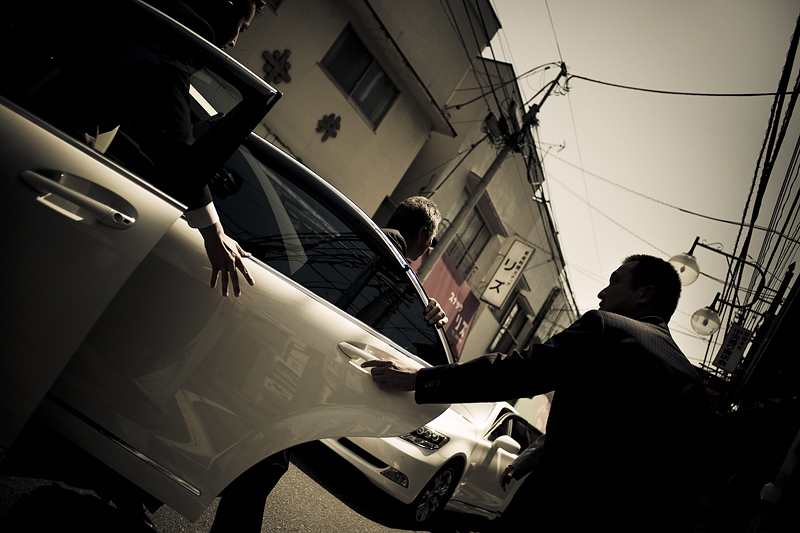
Family driver waiting for his boss to enter the car – 2009
The three highest ranking bosses of the family – the Godfather in the centre – pose for a portrait during a traditional dinner at a restaurant in Kabukicho, Tokyo – 2009
Empty meeting table, right after the initial meeting, in which we got approval to start the project – 2009
The road to Niigata mountains – 2009
Nitto-san, Souichirou’s direct boss, in the back of the car, while driving to Niigata prison to go and pick up two members of the family that are being released from prison that morning, after being incarcerated for several years – 2009
Souichirou and a friend standing in front of the Godfather’s car in the streets of Kabukicho, keeping an eye out – 2010
Tattooed hands with a digit missing. A traditional Japanese tattoo, as used often by the Yakuza, Is a very old and time-consuming process of manually sticking a stick with at the point several sharp inked needles in the skin. This has to happen at a precise angle (depending on skin thickness) and at a precise speed (120/minute), and this is a skill that only traditional Japanese tattoo masters possess. The result is an intricacy, a color palette and a pattern which is not possible with the modern way of tattooing with a machine.Master Tattooist Hori Sensei invites you, he does not accept regular clients. With him, completing a traditional Japanese tattoo takes about 100 hours, can cost up to $10,000, and a schedule of daily or weekly visits needs to be made. As a client, you have only a little say in the design of the tattoo. Hori Sensei determines what is best for you after taking time to talk to you and to get to know you. Only a few traditional Japanese tattoo experts are still alive today in Japan. – 2009
Yamamoto kaicho and two other members shower in an Onsen (typical Japanese bath house) after playing in a golf tournament. Both golf and frequent visits to the onsen are very popular amongst the Japanese. Nowadays, many bath houses carry signs that deny access to people who have tattoos, in an effort to stop Yakuza frequenting them – 2009
In a covert training camp, young Yakuza recruits line up every morning at 5.00 a.m. on the beach to have a moment of meditation, led by master Samurai swordsman Nakata Sensei, before they start their daily training routine of close combat fighting, bodyguard training, and knife practice – 2009
Yamamoto Kaicho, the number two boss, lies still as master Tattooist Hori Sensei completes his full body tattoo. Completing a tattoo takes about 100 hours, and a schedule of daily or weekly visits with the tattoo sensei are made. This is the second time he is being tattooed over his whole body, after the removal of his first full body tattoo severl years before. Tattoos are made by hand in a traditional way, and only few experts still possess the skill to do so – 2009
View of a temple in Asakusa, Tokyo – 2009
Yakuza street fighter aggressively showing off his tattoo in Kabukicho, Shinjuku, Tokyo – 2010
The two bosses highest in rank in the ODO family, having coffee at a hotel bar, after it has been completely cleared first, for safety reasons. Here they are flanked by several strategically positioned bodyguards – 2009
Koi fish hold great symbolic meaning in Japanese culture, and are part of many traditional Yakuza tattoos – 2009
Young prostitute in a bar showing the tattoo on her leg – 2009
Miyamoto-san in his coffin after his death, during his wake – 2010
Members paying their respects by burning incense at the makeshift altar during the traditional Japanese funeral for Miyamoto-san – 2010
The Godfather arrives at a commemoration service for a member who has died. Car traffic is redirected and he is surrounded by bodyguards, as he steps out of the car and into the place of worship – 2009
Members of different families paying their respects at the funeral service for Miyamoto-san – 2010
The funeral service for Miyamoto-san – 2010
The Godfather rolls down his car window while leaving a commemoration service for a deceased member of the family – 2009



 dimart
Σχολιάστε